

THE MAGIC OF NIGHT SAILING

There is something special about taking the helm while scanning the horizon for lights. The sky filled with stars, the mesmerizing effect of phytoplankton phosphorescence, the nighttime visit of dolphins... At dawn, a palette of pink, orange, yellow, and blue shades creates golden glimmers on the waves.
However, night navigation requires effort and training. During the night it is harder to orient oneself, and our senses will heighten as a compensatory mechanism for the lack of vision. Imagination can easily confuse our perceptions in the dark.
INTERPRETATION OF LIGHTS AND DISTANCES
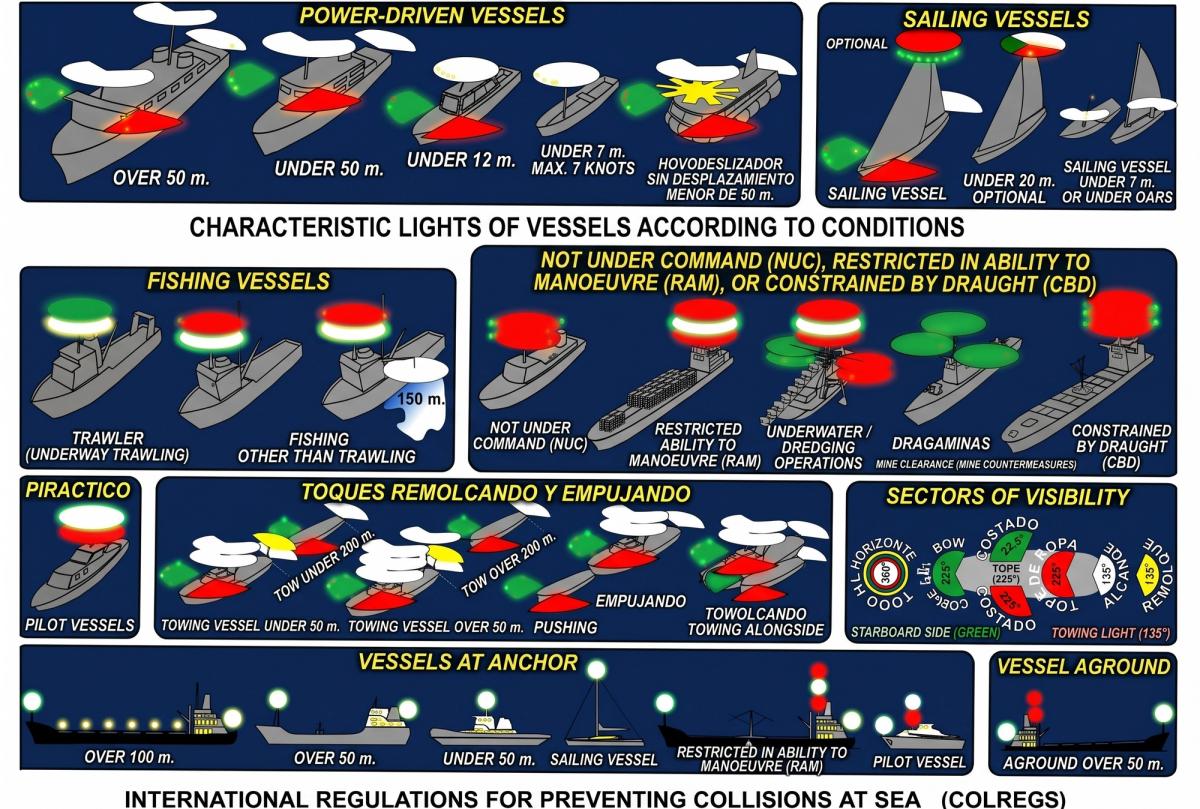
When lights appear on the horizon, you should try to deduce how fast they are approaching or if you are approaching them. It is essential to remain alert and attentive. You must know the light combinations that identify different types of vessels and their maneuvers. When in doubt, keep a reference handy that explains the various color combinations.
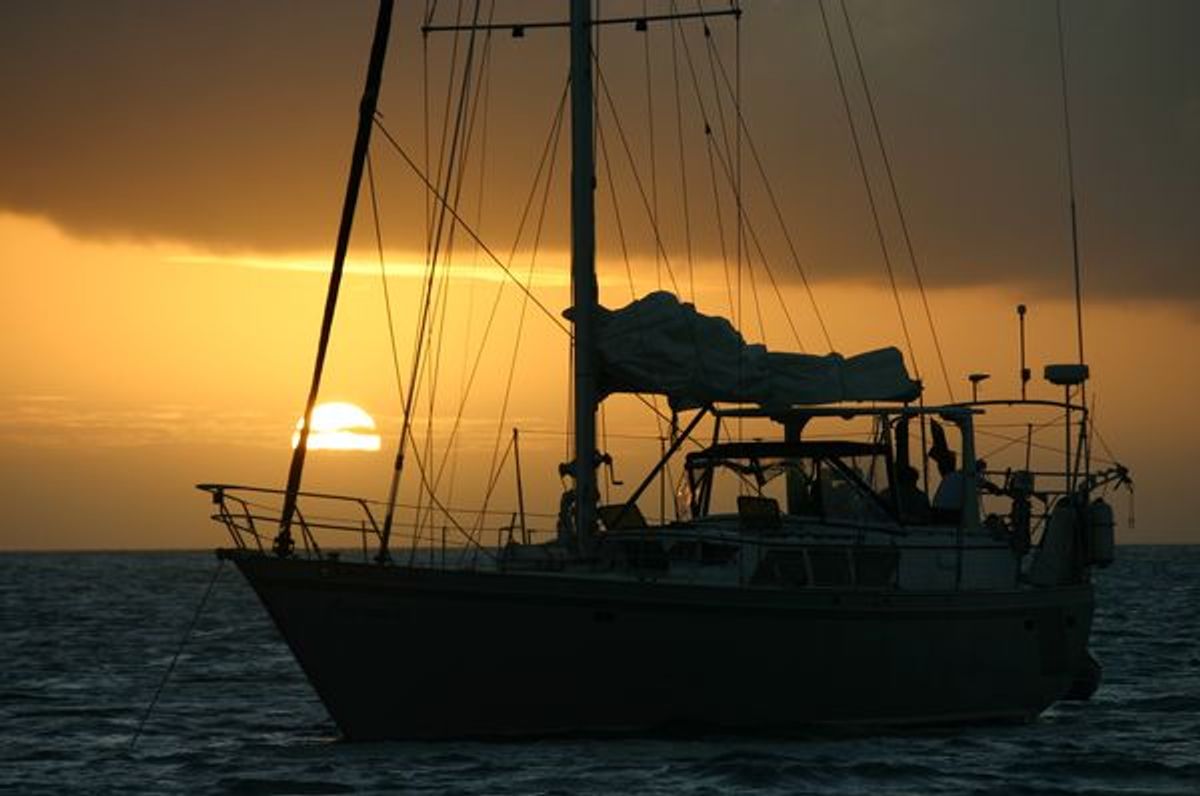
At night, depth perception is lost, making it difficult to judge distances and the headings of lights. The distance is always greater than it appears. You will notice how fast merchant vessels move and how flashes disappear quickly on the horizon.
Radar, while not essential, helps assess distances and evaluate the surrounding scene. If you detect another ship approaching on a collision course, use the VHF radio to state your name, boat type, speed, and heading. Your eyesight will pick up the point of light well before it appears on the radar screen.
THE IMPORTANCE OF INSTRUMENTATION
It is normal to feel uneasy when you can see absolutely nothing. With digital instrumentation (chartplotter), this situation becomes more bearable and manageable.
BOAT LIGHTING
The use of LED, halogen, or fluorescent lights inside is recommended. In the event of an electrical failure, petroleum-derived lamps provide a soft light, though they require extreme caution.
It is fundamental to properly illuminate the boat's exterior so that it is visible from other points. The smaller the vessel, the less it should go unnoticed. The ordinary means to signal a vessel's presence are lights and radar. Extraordinary means are distress signals.
MAKE SURE THE LIGHTS COMPLY WITH THE INTERNATIONAL REGULATIONS FOR PREVENTING COLLISIONS AT SEA (COLREGs)
BATTERIES: THE ELECTRIC HEART OF THE BOAT
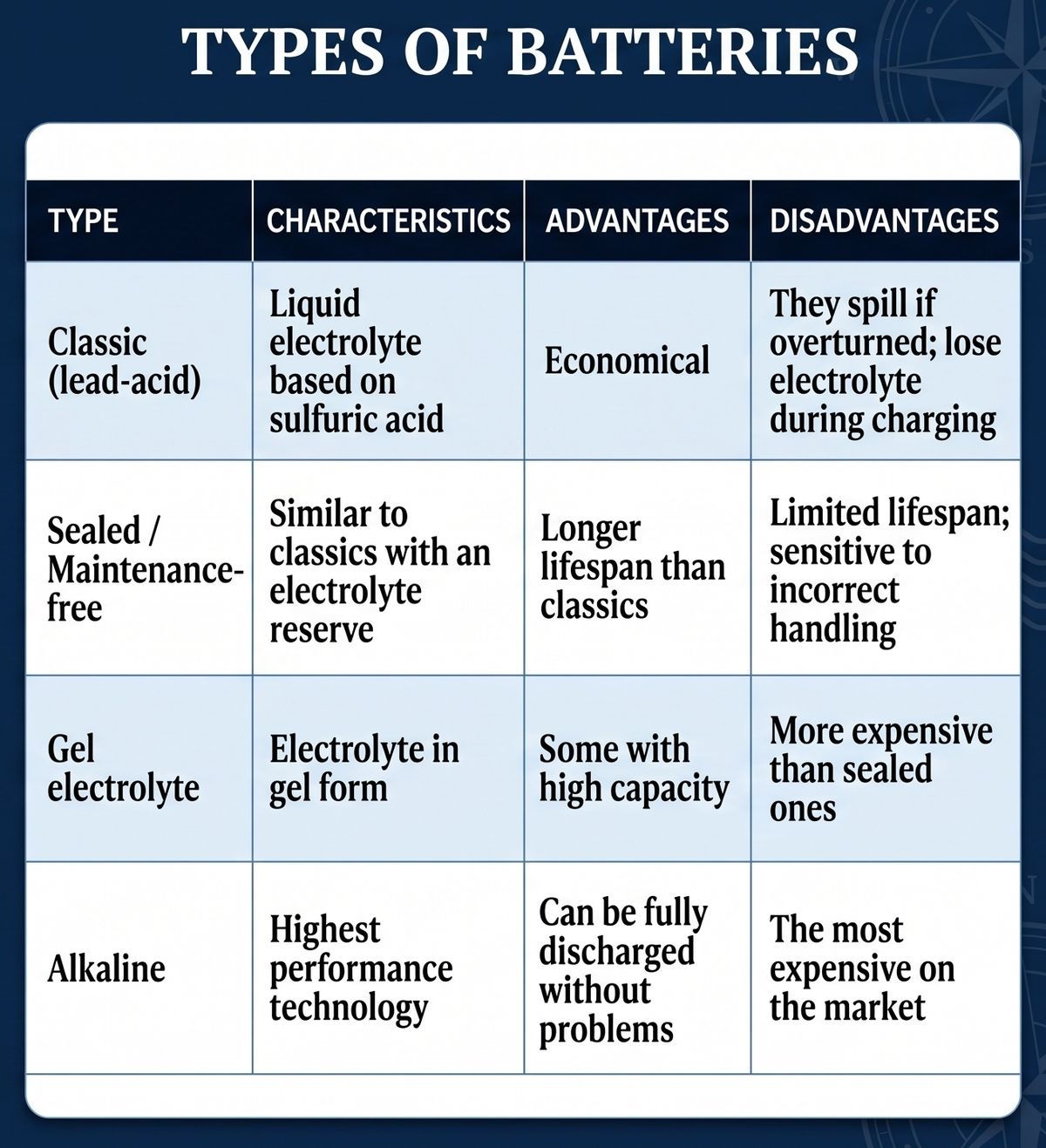
REQUIRED NUMBER OF BATTERIES
It depends on the vessel's size and the engine starting method. On small boats with manual start, one battery is sufficient. Otherwise, a minimum of two batteries is recommended, one being an emergency battery that is isolated and always kept at least at 75% capacity.
BATTERY MAINTENANCE
- Keep batteries as fully charged as possible.
- Clean and grease the terminals at least once a year to prevent discharge due to dirt.
- Check connections regularly.
SABOTEURS OF OUR NIGHT VISION
- Nighttime Presbyopia: Blurred vision of close objects, often accompanied by eye fatigue.
- Nighttime Myopia: Yellow lights are seen clearly from a distance, while blue or green lights appear blurry. At night, the pupil dilates, causing light to scatter in the lens, producing visual aberrations that are aggravated in nearsighted individuals.
- The Blind Spot: A completely blind area centered in the field of vision, ranging between 1 and 5 degrees depending on the person. The best visual acuity is obtained in the area adjacent to where you fixate your view.
TWENTY PRACTICAL TIPS
- Under a full moon, visibility is quite good; take advantage of it during your first night sails.
- Make your first night trips through familiar waters to learn how to interpret distances.
- Before it gets dark, check that all gear is in place and in perfect condition.
- Identify buoys, shallows, and prominent landmarks in the navigation area.
- Any flash can cause glare. Avoid harsh lights on deck. Handle portable spotlights with care: shine from above with an outstretched arm, directing the beam away from the boat.
- Keep listening on VHF Channel 16.
- The navigation compass must have soft lighting. Low-power red bulbs that do not cause glare are ideal.
- Carry a small portable flashlight with red light; it will come in handy on many occasions.
- It can get cold at night. Wear warm clothing and consume hot drinks to maintain body temperature.
- If you use white light when entering the cabin, you will need 15 to 20 minutes to readjust to night vision upon returning.
- Falling asleep is extremely dangerous. Organize watch shifts carefully.
- Before taking your watch shift, get used to the dark for at least 15 minutes. Use red light on board, which does not suppress sensitivity to low light.
- Pay attention to watch changes: the haste of the one leaving and the drowsiness of the one arriving can cause problems. Explain to your replacement any actions taken during your watch.
- Be careful at dawn: fatigue, cold, and breakfasts can leave the lookout in sub-optimal conditions to face issues.
- Do not hesitate to ask sleeping crew members for help. Do not attempt maneuvers you are not sure of.
- Distrust the colors you perceive.
- Do not look directly at the object you wish to observe.
- The sensation of speed is more intense at night.
- Schedule the passage so that arrival at the coast occurs in daylight.
- Use jacklines and safety harnesses during the night, especially if sailing solo or shorthanded.
#NightSailing #NightNavigation