

THE LAST REFUGE: SAVING CORALS TO SURVIVE THE HEAT
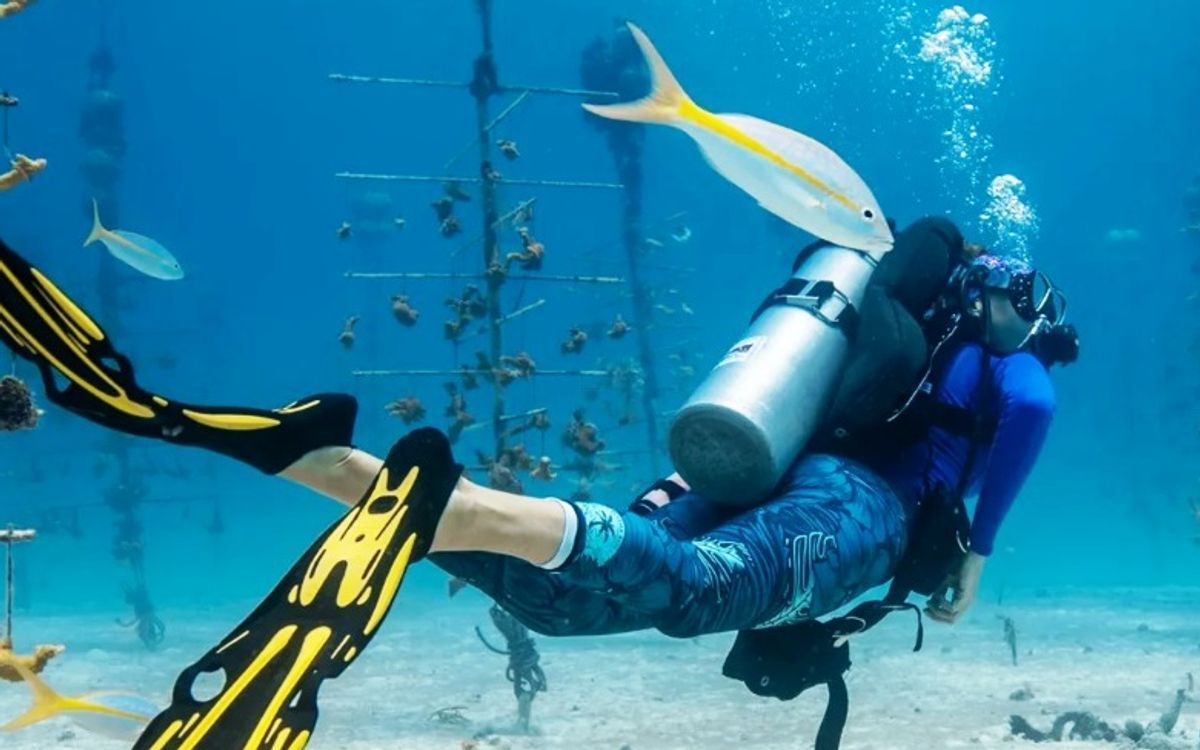
Due to extreme marine heatwaves in Florida, scientists devised a plan to relocate corals to land-based tanks to establish gene banks and prevent the extinction of critical species. This measure aims to preserve ecosystems that, while small, are vital for marine biodiversity and coastal protection.
This decision stemmed from the observation that global warming—driven by deforestation and the burning of fossil fuels—has caused mass bleaching and the immediate death of entire reefs, where coral tissue simply disintegrates upon its own skeleton.
Scientists' current priority is to rescue the genetic diversity of critically endangered species, such as elkhorn and staghorn corals, by creating gene banks that serve as an insurance policy against total extinction. This effort is vital: although reefs cover less than 1% of the ocean floor, they support 25% of marine life, protect coastlines by reducing wave energy by 97%, and generate an annual global economic value of $2.7 trillion.
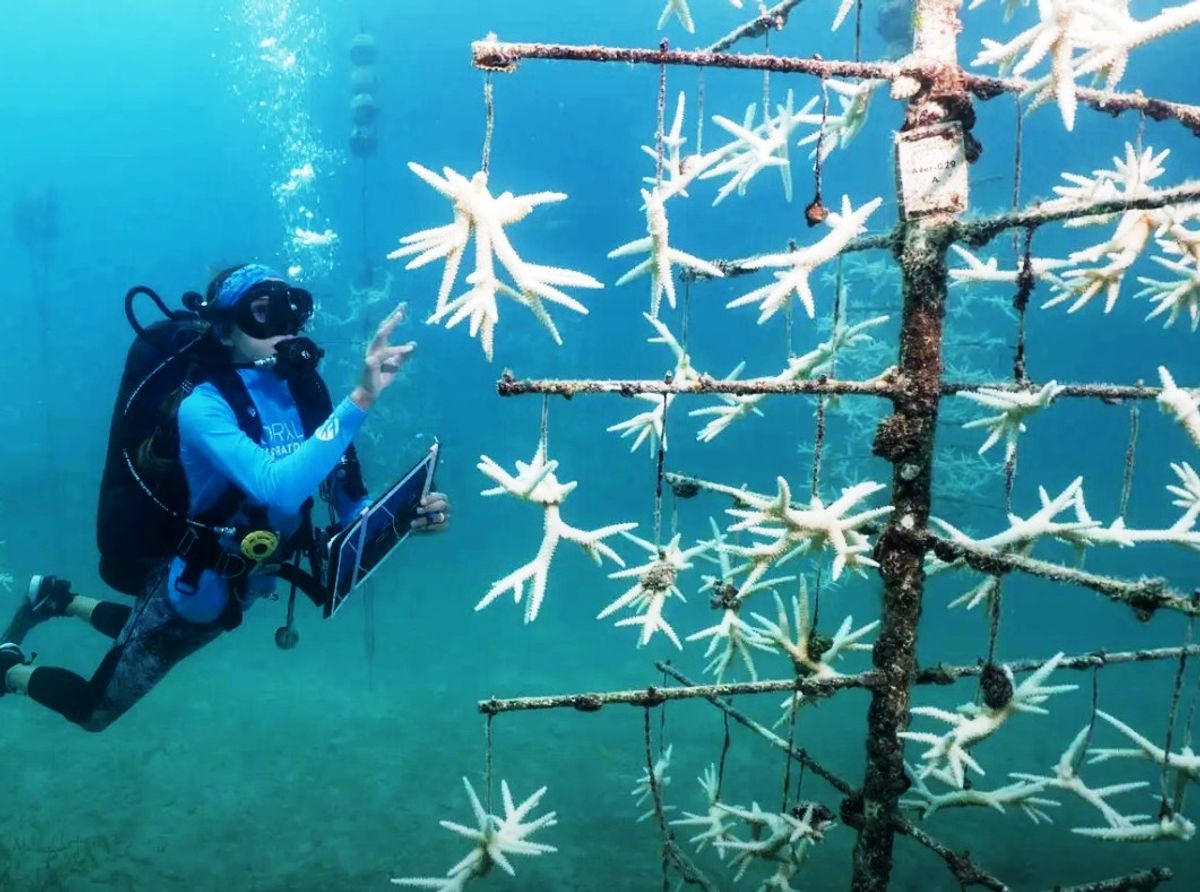
Despite these rescue efforts, the outlook is alarming. According to United Nations projections, a global temperature rise of between 1.5 and 2 degrees could wipe out 70% to 99% of the world's reefs. This raises an existential question for conservationists: is it feasible to restore the oceans if they become too hot to sustain life?
CREATIVE EFFORTS
More than two decades ago, Ken Nedimyer left behind a successful tropical fish business to dedicate himself to a greater mission: cultivating elkhorn and staghorn corals in marine nurseries and subsequently transplanting them to the Florida reef. This passion led him to found the Coral Restoration Foundation (CRF) and, later, the non-profit organization Reef Renewal USA.
HOME TO THE ICONIC CORAL TREES
After years of research, the CRF developed the Coral Tree™—a simple, cost-effective technology that now forms the core of its operations and has been adopted by restoration groups worldwide. Currently, they employ three variations in their nurseries—the original Coral Tree™, the Spiral Tree, and the Mega Tree—thereby managing the planet's largest *in situ* coral nurseries in Florida.
MILLENNIA OF PERSISTENCE UNDER THREAT
Corals have persisted on Earth for 500 million years. In addition to being among the oldest animals, they give life to the world's most biodiverse ecosystems. Remarkably, shallow-water reefs managed to survive the planet's last five mass extinctions; however, today they cannot keep pace with the destruction caused by human activity. Reefs are currently among the most threatened habitats, and stony corals are among the animal groups at greatest risk of extinction. ABOUT CRF
The Coral Restoration Foundation (CRF) is the world's largest marine conservation organization dedicated to restoring reef health. The organization was founded in response to the decline of dominant species on the Florida Reef Tract.
Its methodology involves cultivating endangered species in large-scale underwater nurseries—known as "Coral Tree Nurseries"—before transplanting them to strategic reef sites.
Although based in Florida, CRF has expanded its initiatives into the Caribbean, reaching Puerto Rico and the U.S. Virgin Islands, such as St. Croix. Additionally, in 2017, the organization co-founded the Coral Restoration Consortium (CRC) with NOAA, establishing a collaborative network involving universities, government agencies, and local communities.