
THE KNOTS OF SPEED

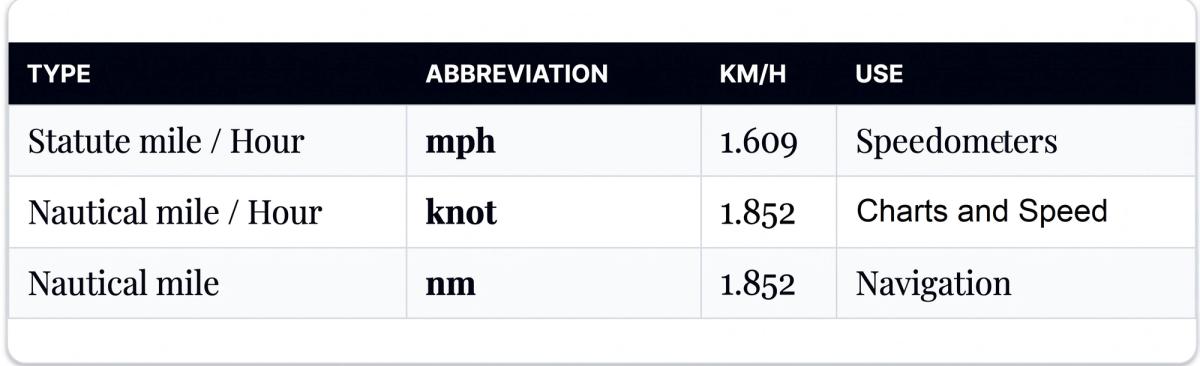
The speed of a boat is never measured in kilometers per hour as we are used to with automobiles, but in knots or miles per hour, which are by no means the same thing.
The confusion arises from the existence of two different types of miles, each with distinct values and applications. A nautical chart indicates distances in nautical miles, while a boat's speedometer shows the land mile. This discrepancy is dangerous: an inattentive pilot could easily miscalculate the distance of a trip, consuming more fuel than expected and risking running out of gas in the middle of the water.
THE CRITICAL DIFFERENCE
Added to this is the lack of standardization in maritime communication. Sometimes a boat's speed is expressed in mph, sometimes in knots—a critical distinction that creates significant practical differences.
| SPEED | IF MPH | IF KNOTS | DIFFERENCE |
|---|---|---|---|
| 20 | ~17.3 knots | ~ 37 km/h | ± 19.3 |
| 30 | ~ 26 knots | ~ 55.6 km/h | ± 29 |
| 50 | ~ 43.4 knots | ~ 92.6 km/h | ± 49.2 |
WHY THIS SYSTEM PERSISTS
This inconsistency would be unnecessary if the maritime industry simply adopted kilometers per hour. However, the reason these nautical measurements persist is primarily historical: since Americans use miles per hour in their automobiles, they naturally applied the same system to their vessels, creating a global standard that endures to this day.
SUMMARY
ORIGIN OF THE KNOT AS A MEASURE OF SPEED
The term "knot" originates in medieval maritime practices, dating back to the era of sailing ships and caravels. Sailors developed an ingenious method to measure a boat's speed using a simple device called a "chip log" or "log line." This consisted of a piece of wood (typically weighted at one end to keep it relatively stationary in the water) tied to a rope that had knots tied at regular intervals—approximately every 14.3 meters.
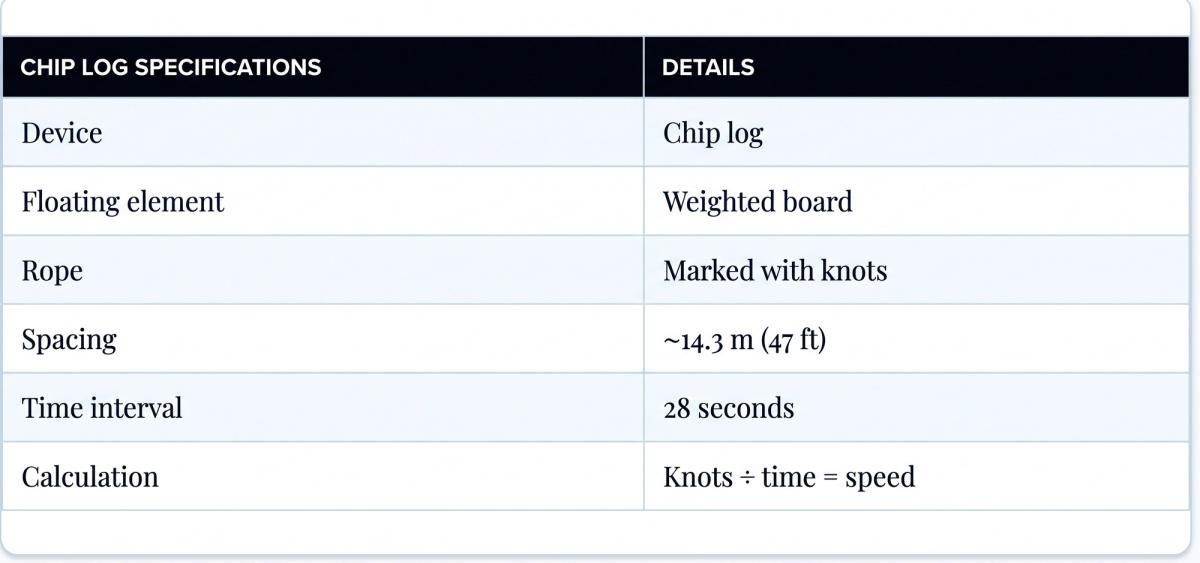
To measure speed, sailors would cast the chip log into the water and count how many knots passed through their hands during a fixed time interval of 28 seconds (measured by an hourglass). Each knot that passed represented one nautical mile of distance traveled in one hour—hence why the unit became known as a "knot." This practical measurement system proved so effective that it became the maritime standard and persists to this day, even with modern instruments like GPS and electronic equipment.
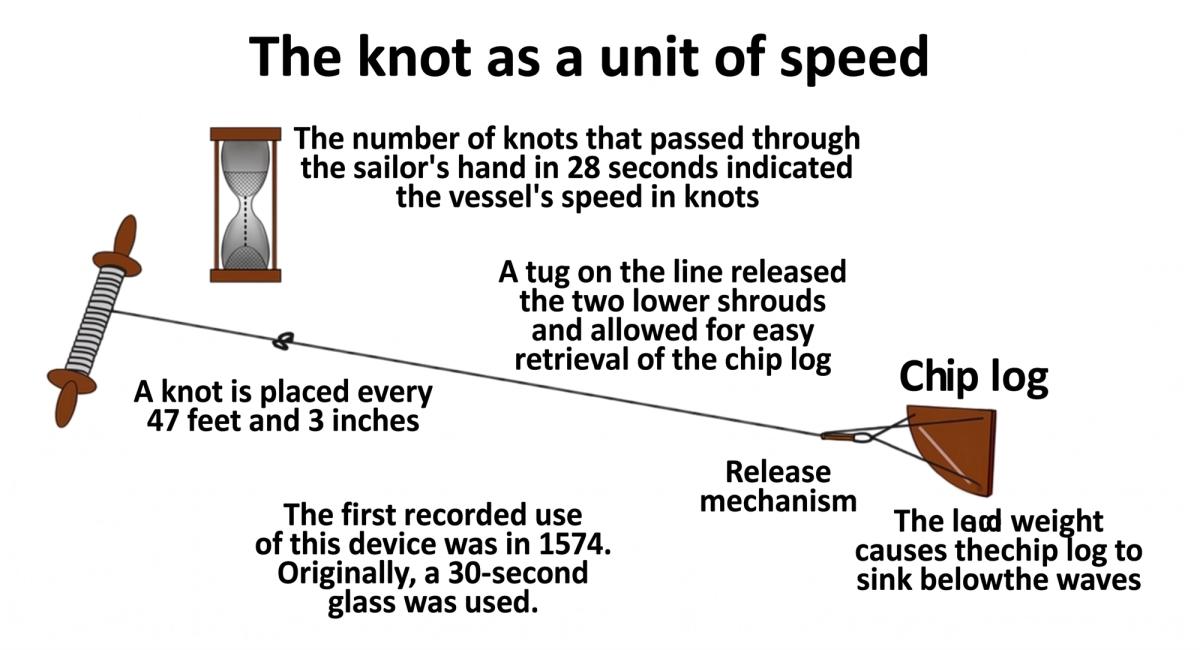
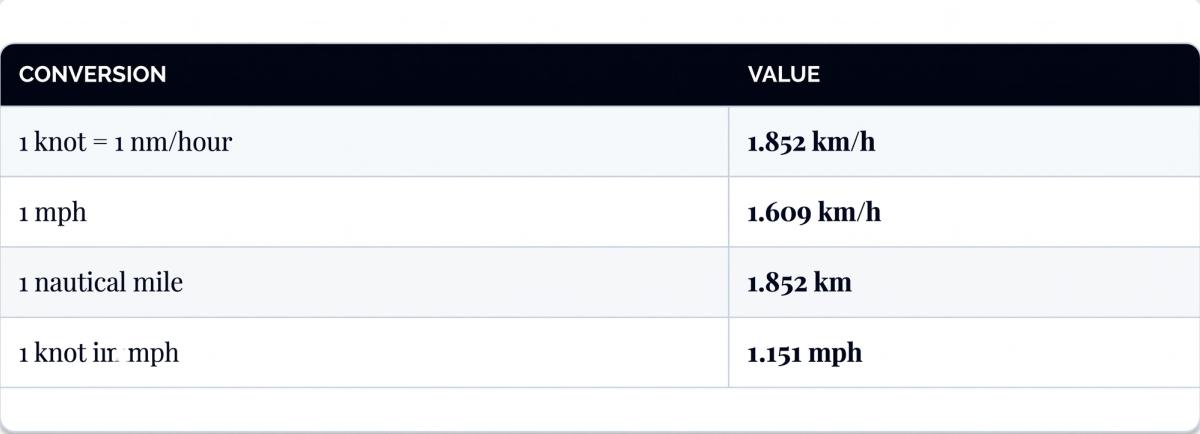
The nautical mile itself was deliberately defined to correspond with this historical measurement: one nautical mile is approximately equal to 1,852 meters, the distance that a line marked with knots would reveal when a boat was traveling at one knot per hour. This elegant connection between the measuring tool and the unit of distance demonstrates the ingenuity of medieval sailors and explains why this system has remained virtually unchanged for centuries.