
SAILING TO MANAGE: SAILING AS A BUSINESS LABORATORY

From the role of the skipper to the function of the boat owner, a regatta uses sailing as a perfect metaphor for the business world, turning a boat's deck into the most effective networking space for executives.
For 18 years, the ESCP Europe business school has been teaching its students how to steer the helm of an international company, taking them out of the classroom to recreate the hostility of the business world at sea.
The importance of taking on responsibilities, teamwork, or knowing how to relate to different cultures are some of the values that participants take away with them.
FAVORABLE WIND AND CALM SEA
In this nautical scenario, each vessel must implement a strategy that involves and motivates the entire team in order to look to the horizon and achieve a leadership position.
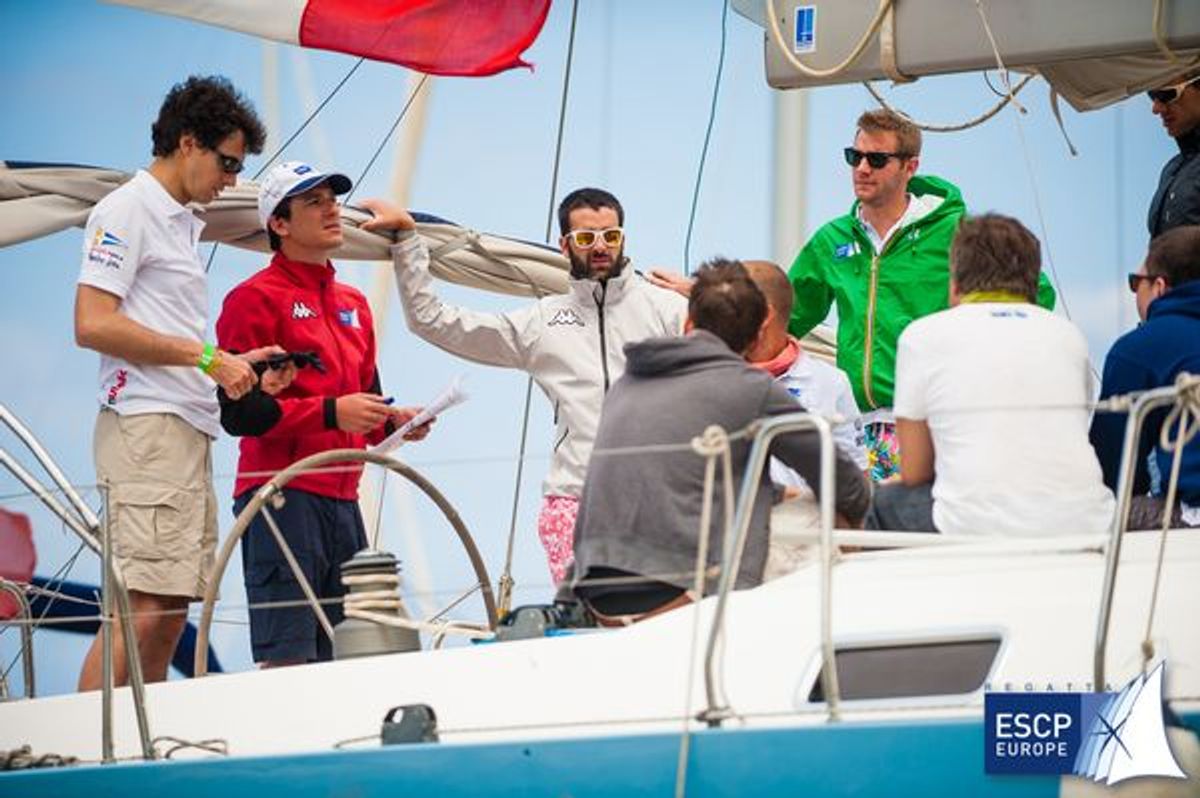
As everyone is in the same boat, just as in companies, the relationship between the skipper and the crew is based on a chain of command, where every movement and every decision must be coordinated to prevent everything from going under. Paradoxically, each crew member is autonomous and responsible for their actions.
SKIPPER / GENERAL MANAGER
Just as a general manager must ensure the company goes in the right direction, the skipper must be able to straighten the vessel if the wind turns against them. They must also know the crew, just as a boss knows their team, and, most importantly, be able to instill the company culture in the crew to know how to face the most difficult moments.
TACTICIAN / STRATEGY MANAGER
The tactician would be the strategy manager, who must know the sea like no one else to anticipate a possible storm and successfully navigate all the market's ups and downs. Fixed or unchangeable strategic plans are not option.
NAVIGATOR / PLANNING MANAGER
The planning manager, who must have the ability to increase the company's productivity, has a lot in common with the navigator, who, at the end of the day, is the one who knows when to make the boat sail faster to achieve the best position.
CREW / STAFF
The crew represents the workforce, essential for any company to function. By executing the directives of their superiors and conveying the pulse of the market to them, they make sure the boat's sails are in the correct position so that the wind carries them toward the horizon.
BOAT OWNER / MAJORITY SHAREHOLDER
As if they were the president or the majority shareholder, the boat owner is the one who risks their assets so that the adventure can materialize, but also the one who will keep the winner's trophy of the regatta, even if they have not left the land.
A DIFFERENT WAY TO FIND WORK
Beyond a sports competition, the regatta is a testing laboratory for training future business leaders. The choice of boat by the students is not trivial, as students are distributed into crews where executives and middle management of companies related to their career aspirations are found, allowing them to do perfect networking beyond traditional standard interviews.
A BINOMIAL THAT SHAPES MANAGERS
The planned combination between sport and business has been used in practical cases of leadership and teamwork, but also by analyzing the business or sponsorship opportunities generated by events, teams, or the most important players in each discipline.
And why not also use it to foster relationships between professionals? That is what Flavio Nappi, an alumnus of ESCP Europe, thought when in 2008 he organized the first business school regatta, where students, alumni, and companies gathered.
"Corporations like the Boston Consulting Group have hired people during the regatta; other firms have launched commercial initiatives, and several companies have signed contracts with clients they had invited to participate," says Nappi.
#LeadershipAtSea #ExecutiveNetworking #TeamworkSailing