

OWNING A MEGA-YACHT: FROM ASPIRATION TO RESPONSIBLE OWNERSHIP

Before diving into the freedom of a megayacht, it is essential to understand everything from the reasons that make it attractive, to the critical selection decisions and the reality of maintaining it.
Before buying, clearly establish how you will use the yacht. Is it for cruising in Mediterranean coastal areas? For expeditions to Arctic waters? For corporate entertainment? For long family cruises? Your purpose will determine the type of yacht, its size, range, propulsion systems, and interior layout.
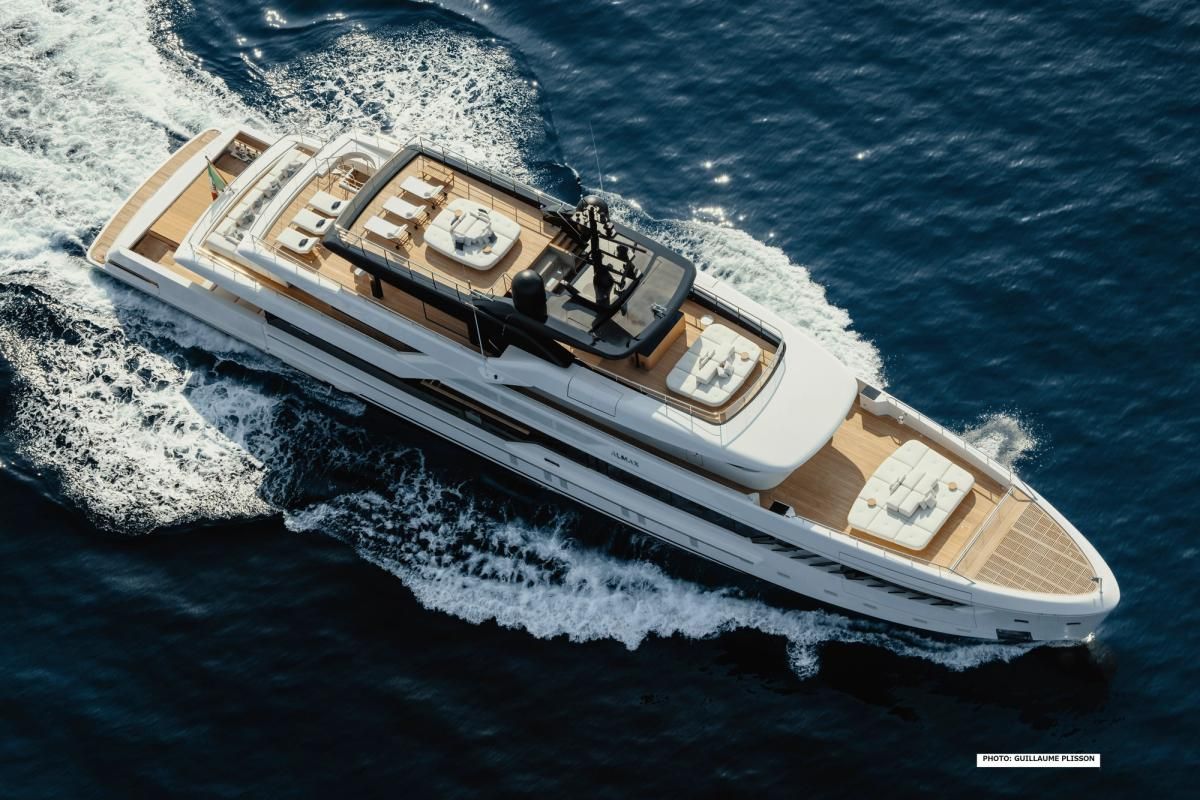
Megayachts range from 24 meters to over 180 meters in length. Larger yachts offer more space and amenities, but require larger crews, consume more fuel, and have less access to ports and anchorages. Medium-sized yachts (30-50 meters in length) offer a balance between luxury and manageability.
It is important to consider the following aspects:
- Number of guests you will accommodate regularly
- Desired range without refueling (measured in nautical miles)
- Staff capacity: larger = more crew required
- Port accessibility: very large yachts cannot access many small ports
NEW VS. PRE-OWNED
New yachts offer state-of-the-art technology, warranties, and complete customization, but cost significantly more and depreciate rapidly in the first few years.
Pre-owned yachts from reputable builders can offer better value for money, especially those 3–7 years old. However, they require thorough inspections.
An important recommendation is to consult independent marine surveyors before any pre-owned purchase.
BUILDER AND REPUTATION
Choose a builder with a proven track record, such as:
- Italian builders (Azimut, Benetti, Sanlorenzo): renowned for elegant design
- Dutch builders (Feadship, Heesen): known for robust engineering
- German builders (Abeking & Rasmussen, Lürssen): specialists in long-range navigation
- Turkish builders (Bilgin, Tansu): excellent value for money
A yacht from a reputable builder holds its value better, has better spare parts availability, and is easier to resell.
TECHNICAL SPECIFICATIONS AND AVAILABLE SPACE
Engines and propulsion:
- Conventional diesel engine: economical, reliable, noisy
- Hybrid or electric propulsion: quieter, more eco-friendly, more expensive
Stabilization system:
- Stabilizing fins: reduce rolling
- Water motion tank system: more expensive, but more effective
Fuel range:
- Consumption per hour of navigation
- Most consume 500–1,500 liters/hour depending on size and speed
Navigation systems:
- GPS, radar, sonar, advanced weather systems
- Long-range satellite communications
Interior layout and spaces:
- Number of cabins (owner, guests, crew)
- Type of lounges (cinema, gym, spa, library)
- Galley (designed for a professional chef)
- Exterior spaces (sunbathing area, aft platform, covered gym)
FLAGS AND REGISTRIES
It is advisable to consult maritime law specialists on where to register your yacht. The choice of flag is important for legal, tax, and operational reasons. Common flags include:
- Malta, Cyprus, Panama: tax and legally flexible
- Cayman Islands, British Virgin Islands: privacy
- National registries: may have restrictions, but higher prestige
ACTUAL PURCHASE BUDGET
It is advisable to budget between 10–15% of the purchase price for:
- Complete pre-purchase inspection
- Legal fees
- Taxes and duties
- Initial insurance
- Personal equipment and final customizations
MAINTENANCE AND OPERATIONAL COSTS
Owning a megayacht is an ongoing financial commitment, as total operating costs typically represent 5–10% of the purchase value annually. For a $50 million megayacht, expect to spend between $2.5 and $5 million per year. For example:
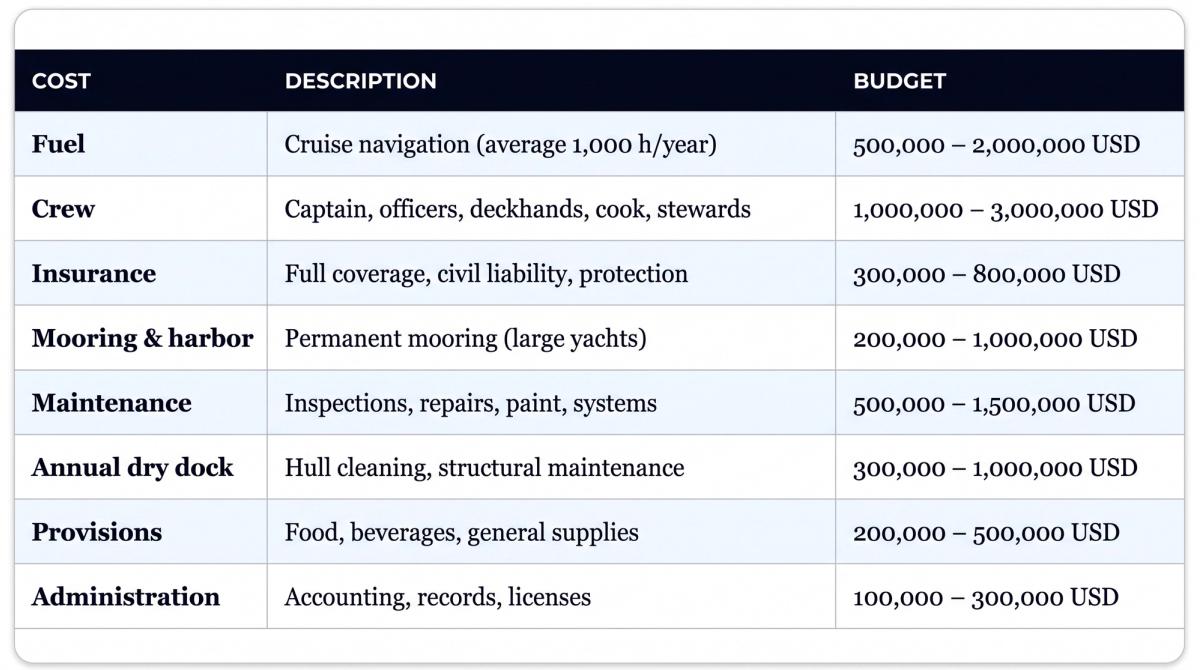
Fuel is a variable expense that depends on the size of the yacht, engine type, cruising speed (top speed consumes 3–5x more than economy speed), and distances traveled.
Thus, a 50-meter megayacht at cruising speed consumes approximately 800–1,200 liters/hour. If you sail 1,000 hours a year (just over a week per month), you will spend approximately 800,000–1,200,000 liters of premium marine fuel, costing between $1.2 and $2 million.
CREW COSTS
The crew is essential for safe and enjoyable operation. The number will depend on the size and complexity of the yacht:
- 24–30 meter yachts: 4–6 people (captain, deckhand, chef, stewardess)
- 30–50 meter yachts: 6–10 people
- 50+ meter yachts: 10–25 people
Annual costs per person can range between $60,000–$150,000 USD (including salaries, accommodation, training, vacation). It is important to know that these professionals need international certifications (STCW, Advanced Seafarer) that command higher salaries.
PREVENTIVE MAINTENANCE
- Engine service: $50,000–$200,000 USD (depends on engine hours)
- Hydraulic and electrical systems: $50,000–$150,000 USD
- Pools, spas, and water systems: $20,000–$100,000 USD
- Painting and marine protection: $100,000–$400,000 USD (every 3–5 years)
- Navigation and communication systems: periodic updates, $50,000–$150,000 USD
- Dry dock entry (every 2–3 years):
- Hull cleaning and treatment
- Structural and propulsion inspection
- Replacement of sacrificial anodes
- Inspection of piping and internal systems
- The above can cost between: $300,000–$1,500,000 USD depending on size and conditions found.
INSURANCE
- Physical damage (all risk)
- Civil liability (injury, third-party damage)
- Constructive total loss
- Rescue and salvage expenses
- Typical cost: 1–3% of the yacht's value annually. For a $50 million yacht, between $500,000–$1,500,000 annually.
DEPRECIATION
Megayachts depreciate approximately 5–8% annually during the first 5 years, then stabilize. A yacht purchased for $50 million may be worth only $35 million after 5 years, even with perfect maintenance.
The exception lies with ultra-luxury yachts from reputable builders with impeccable ownership history; these retain their value better.
OPTIONS TO REDUCE COSTS
- Charters/rentals: Charter your yacht when not in use to offset costs (can generate $300,000–$1,000,000 annually)
- Co-ownership: Share costs and time with another owner
- Leasing: Lease instead of buying
- Professional management: Specialized companies handle operations and chartering
Owning a megayacht is a combination of passion and financial pragmatism. The reasons for doing so—freedom, privacy, luxury, and experience—are profound and genuine. But the reality is that it requires an ongoing financial commitment equivalent to maintaining a small floating empire.
If you commit and agree with the above, then the journey toward megayacht ownership is an adventure worth pursuing. Just be sure to do so with your eyes wide open.
#MegayachtPrivacy #LuxuriousSanctuary