
HOW TO CHOOSE YOUR FISHING KAYAK
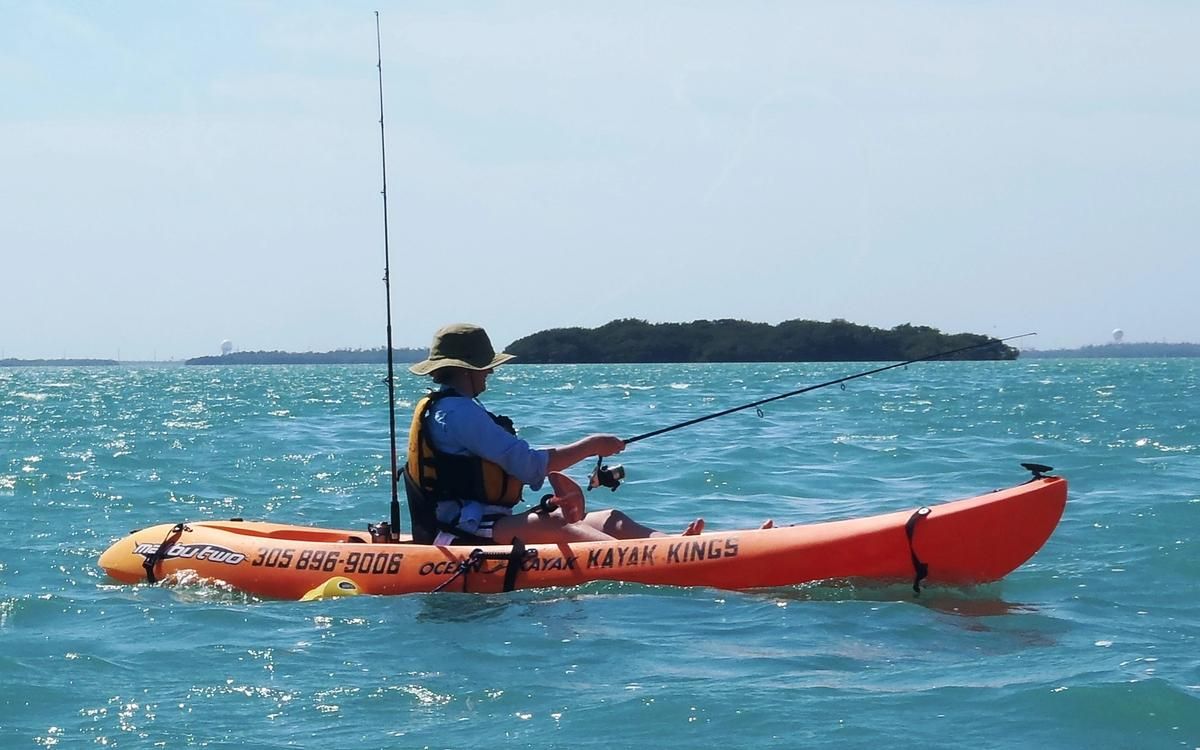
There are key elements to consider when choosing a sea fishing kayak: stability, speed, maneuverability, tracking ability, payload capacity, storage space for that payload, necessary fishing gear, and safety.
Basically, there are two types of kayaks: those with the hull widest near the stern (Swedish form) and those with a fish-form hull. All else being equal, a kayak with a fish-form hull stays more level, while Swedish-form designs are somewhat faster and more maneuverable.
LENGTH OVERALL (LOA)
As with any vessel, this is the total length of the kayak from bow to stern. Fishing kayaks usually measure between 3.3 and 5.5 meters. However, the most important aspect regarding length is the portion of the hull that sits in the water (waterline), which affects its maneuverability and tracking ability. A sea fishing kayak must hold its course without requiring constant course corrections.
Paddling a kayak generates a bow wave and a stern wave. Since approximately two-thirds of the energy required to glide the kayak at its maximum speed is used to create and propel these waves, the farther apart these waves are, the easier the forward push will be.
Every veteran paddler knows there is a point where you feel dragged by the very waves you generate and cannot gain more speed no matter how hard you try. This is called the kayak hull speed threshold.
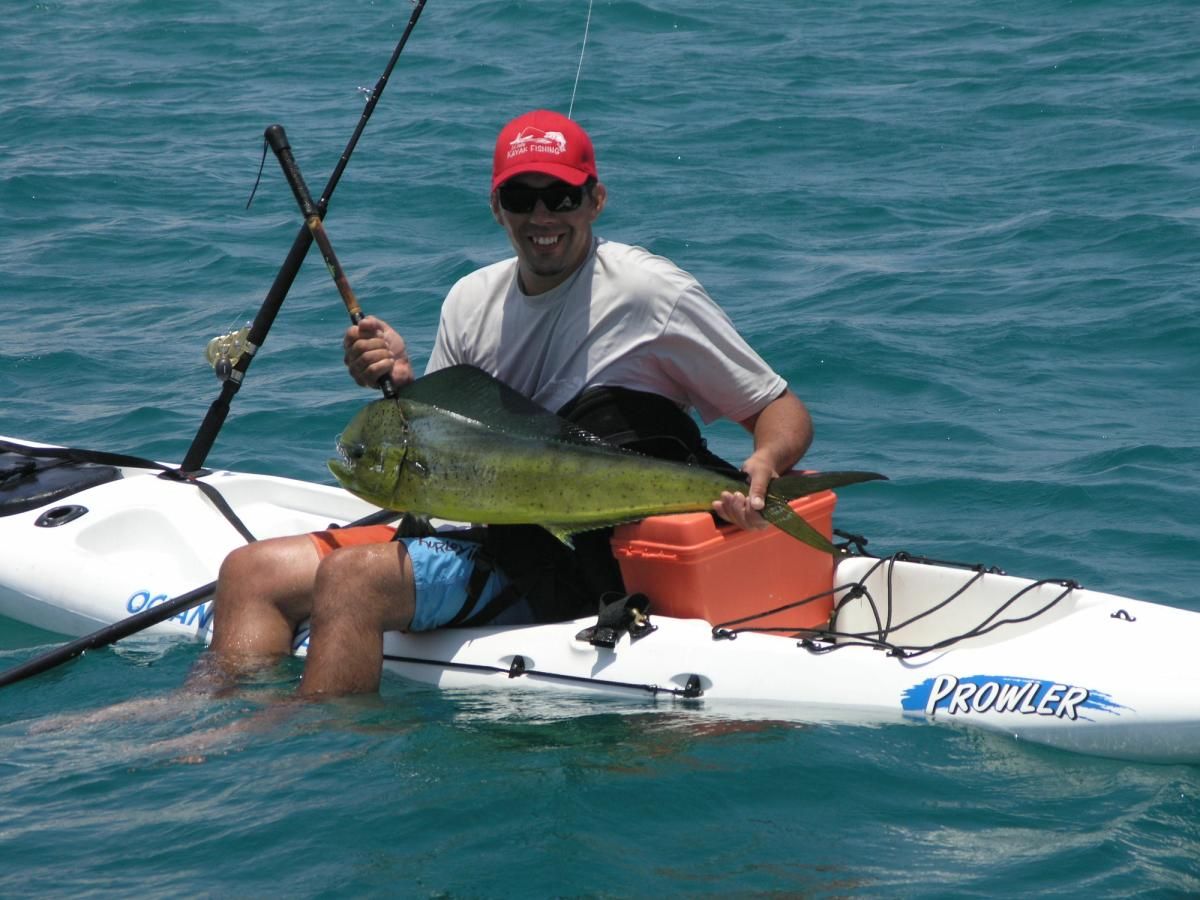
There is a rule called Displacement Speed (the displacement or wetted hull on a vessel is the part below the waterline) based on displacement weight and the Speed-to-Length ratio. This rule allows for an approximate calculation of a kayak hull's maximum speed in knots by multiplying the square root of the waterline length (in meters) by 2.43. This commonly used constant represents the wave propagation speed relative to the hull length. While this provides an idea of the kayak hull's potential, a naval architect would use a specific ratio for each hull design.
Theoretically, a longer and narrower kayak is faster than a short one. But this only holds true under equal conditions and when paddling at maximum effort. Usually, paddling is done at a controlled pace, at which point another factor comes into play: the submerged surface area of the hull.
The greater the submerged surface area, the greater the friction against the water. While the energy to overcome this friction accounts for the remaining third at maximum speed, the proportion increases at lower speeds. At 3.5 knots, over 80 percent of resistance is friction because the bow and stern waves are much smaller. Therefore, at normal trolling speeds, those with a longer kayak (more submerged surface area) will use more energy to move compared to someone in a shorter kayak.
ROCKER
Rocker is the upward curve formed by the keel line from the center of the vessel toward the bow and stern, and it relates directly to waterline length. A kayak with significant rocker, having a shorter waterline, turns more easily, tends to keep its bow up when surfing, is highly maneuverable, and is more efficient due to its smaller submerged surface area. You can increase a kayak's functional rocker by edging (tilting) it, but take note: while this action aids maneuverability during turns, it also increases the risk of capsizing.
BEAM AND HULL SHAPE
In nautical terms, stability is a vessel's ability to right itself after heeling (leaning). Static stability is a kayak's stability in calm water. The most critical stability is called secondary or reserve stability, which refers to leaning the kayak to one side up to the capsizing point.
A beginner paddler's initial impressions when sitting in a kayak depend largely on the vessel's beam (maximum width). If they try a narrow kayak and a wider one, in most cases they will prefer the latter for its apparent greater stability. A more experienced paddler will prefer a narrower craft because they are faster and more efficient.
Stability is closely related to the kayak's waterline beam, which changes as the kayak leans. Depending on hull shape, the waterline beam may increase with a slight lean (good primary stability) or with a pronounced lean (good secondary stability).
A kayak with good primary stability is more comfortable on flat water, but for choppy conditions, a kayak with good secondary stability is more suitable.
Furthermore, the chine refers to the shape of the hull where the kayak's sides meet the bottom. A V-shaped hull with hard chines will have high initial stability, but less if leaned the wrong way when crossing a strong current. A kayak with a rounder bottom and soft, gradual chines will offer good secondary stability.
Ultimately, the ideal fishing kayak must balance good stability with responsiveness in choppy seas.
TRACKING STABILITY
Tracking stability is defined as the balance between the vessel's hull and the rudder. Only a system of forces capable of returning the craft to its intended course when an external force knocks it off course allows you to speak of true tracking stability.
A rudder helps keep the vessel on a set course in strong winds and controls stern drift (weather vaning). This does not mean a rudder can replace proper paddling strokes for steering. The rudder is controlled with the feet via cables running to the footrests. Over time, slack will develop in the system, which can eventually result in a spongy feel.
Some kayaks come equipped with a skeg, a small fin located on the keel. The skeg helps the kayak track straight and resist drifting.
If you have a kayak equipped with a rudder and/or skeg, take precautions during transport and when entering or exiting the water. Also check that the rudder functions properly before starting your fishing day, as a rudder jammed to one side can reduce speed and make turning difficult.
CARGO VOLUME
In touring kayaks, cargo is distributed according to the kayak's overall capacity. In a fishing kayak, the storage space is usually an open cargo well in the stern. If a fishing kayak is equipped with dry hatches large enough to store bulky items, weight should be distributed so that a major portion sits toward the stern. Given that the vast majority of sit-on-top fishing kayaks have Swedish-form hulls, this distribution increases secondary stability, minimizes weather vaning, and raises the bow to face oncoming waves more safely.
SAFETY AND ITS RELATION TO COLOR
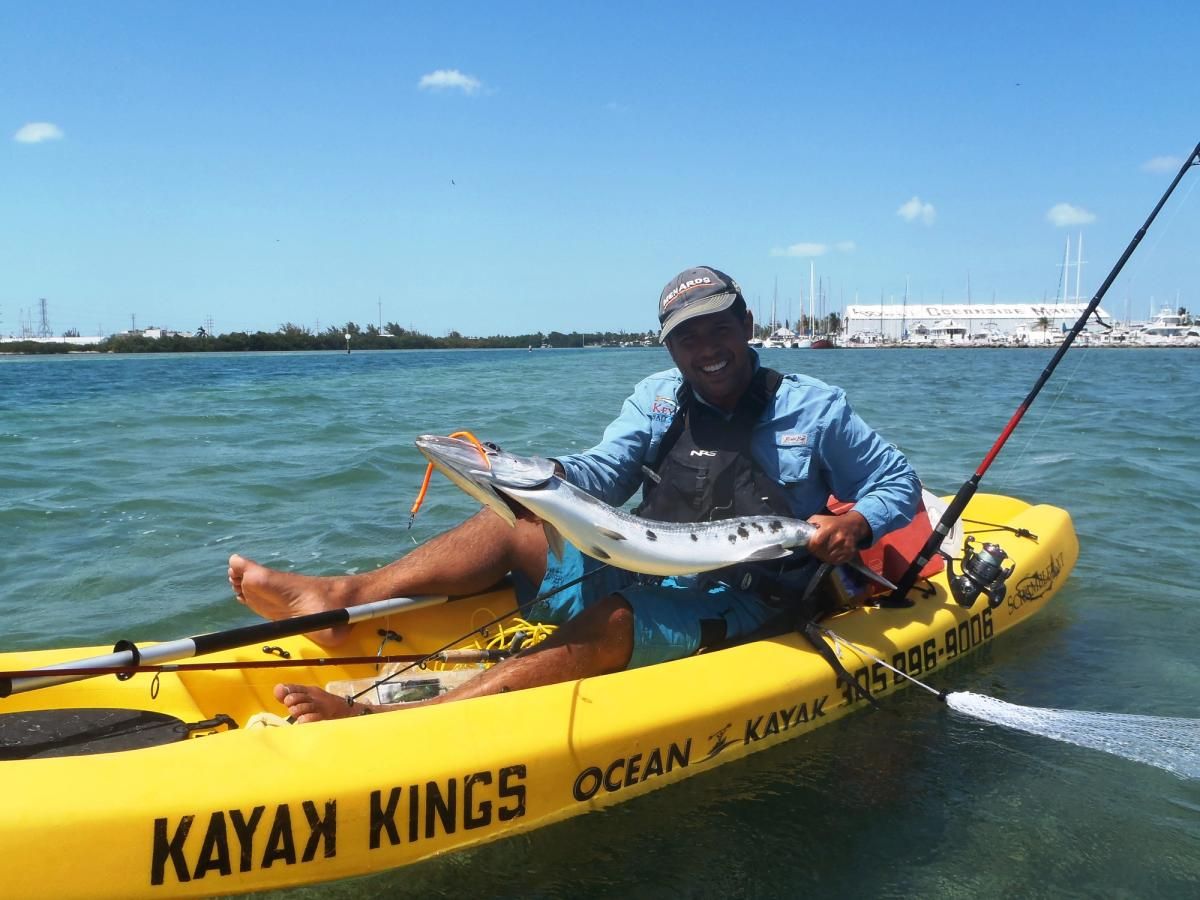
In the event of a mishap during a solo fishing outing, it is ideal for the kayak to be red or yellow, as these colors offer the best visibility under all conditions.
#KayakFishing #EcoSeaConnection