

DOES YOUR BOAT ATTRACT FISH OR SCARE THEM AWAY?

Knowing the type of sounds and vibrations produced by your boat is not just a matter of maintenance: it is the strategic key to multiplying your catches. Science has a lot to say on the subject.
Imagine the scene: a yacht is trolling at low speed. The stifling heat and the monotonous hum of the engine at low RPMs have the crew in a semi-conscious state. Suddenly, a shout breaks the calm.
A billfish appears right off the stern! Someone reacts instantly, twitches the bait, and the battle ensues. The strike was a success thanks to the angler's quick reflexes, because the fish likely hadn't even seen the bait until it was right in front of its face.
This phenomenon happens more often than you think. Whether trolling slowly or cruising at high speeds through the wake's foam, many billfish "materialize" just a few meters from the hull. They weren't attracted by the bait: they were attracted by the boat.
So, are there boats that are "luckier" than others?
THE ILLUSION OF "GOOD LUCK"
Any angler knows that even the best gear goes through golden seasons and terrible dry spells. We usually attribute it to luck: if it's a good day, we're geniuses; if it's bad, the sea just wasn't on our side.
But luck is nothing more than statistics working for or against you. If the crew's skills and the boat remain the same, why do the results change so drastically?
The answer is often hidden underwater: in your vessel's acoustics.

UNDERWATER PHYSICS: TONES, FREQUENCIES, AND DECIBELS
Although predators like billfish are visual hunters, they don't rely solely on their eyes. The vibrations traveling through the water act as their hunting antennas.
- Frequency (Hertz / Hz): The pitch or tone of the vibration. The average human ear detects between 20 Hz and 20,000 Hz (a musical C sits around 261 Hz).
- Amplitude (Decibels / dB): The volume or pressure of the sound wave.
To put sound power into perspective, take a look at this scale:
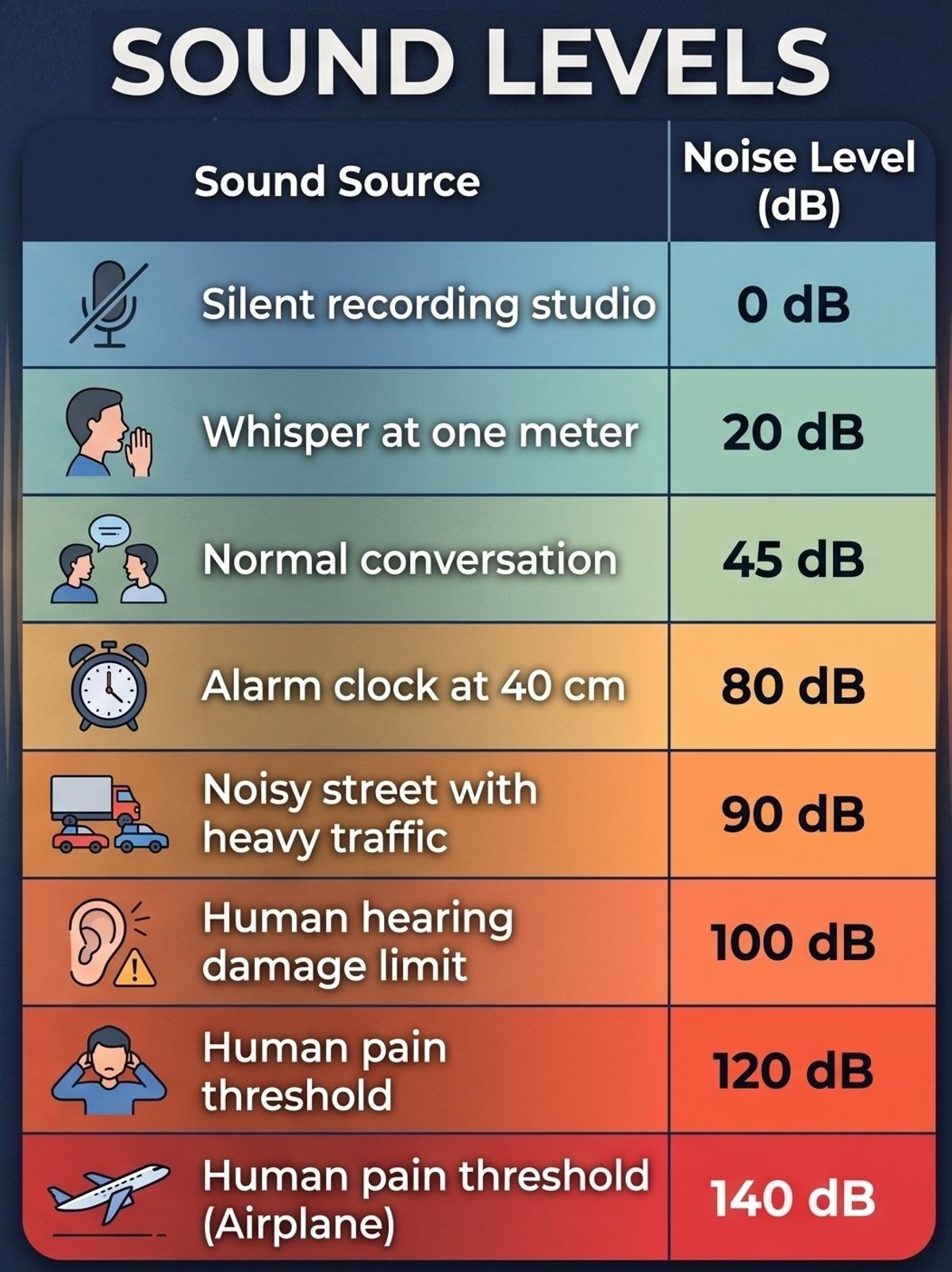
Diesel or gasoline engines generate a massive amount of noise. In fact, at trolling speed, wearing hearing protection near the engine room isn't an exaggeration—it's health care. But the million-dollar question is: how do fish perceive this racket?
SOUNDS THAT ATTRACT: THE "TUNING" OF THE HUNT
Sound in the sea acts like a magnet... or a deterrent. A clear example is large sharks: they are drawn to low-frequency pulses (20 to 60 Hz), but flee from high-pitched, high-frequency tones (400 to 600 Hz).
This attraction to low frequencies occurs because they mimic the intermittent vibrations generated by a struggling, injured fish. It is the unmistakable signal of "easy food" for large predators.
THE SECRET OF TWIN ENGINES
Few things generate more enticing low-frequency impulses than two diesel engines inside a fiberglass hull. Because they are never perfectly synchronized, the slight difference in RPM creates a steady pulsation. For example, a difference of just 10 RPM creates a low-frequency pulse that repeats every six seconds—an irresistible lure.
Sounds that spook, or the "squeal" that ruins the day: Sportfishing and commercial shipyards invest fortunes into eliminating parasitic noise. Shaft alignment, propeller balancing, and vibration isolation are top priorities. And there is a clear reason: a boat emitting high-frequency, high-pitched vibrations will perform terribly, no matter how expert its captain is.
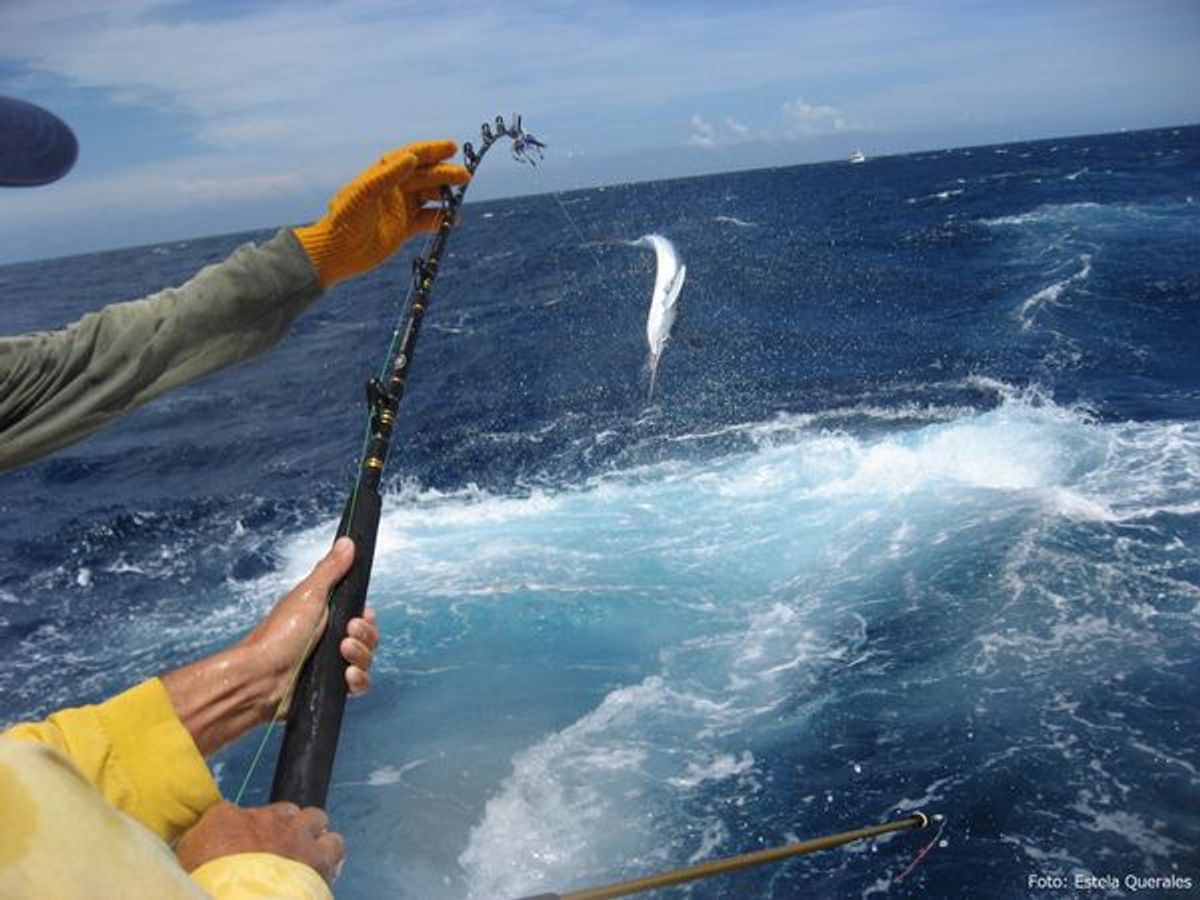
Research on commercial fleets revealed that boats with the poorest catches (despite being identical to the most successful ones) emitted noises above 1,500 Hz due to wear or misalignment in bearings, shafts, and propellers.
A real-world case: A group of fishermen noticed that the port engine emitted a high-pitched "whine" as the RPMs increased. They decided to put that engine in neutral at low RPM and run primarily off the other. The result? They returned to port with a deck full of fish. They had eliminated the repulsive high-pitched tone and, in doing so, created a perfect low-frequency pulse between the two engines.
EXTRA FACTORS TO CONSIDER
- Stray current leaks into the water: Beyond causing fierce galvanic corrosion on metal parts, small electrical currents push fish away from the hull. Check your electrical system.
- Acoustic attractors and commercial rattles: These tend to work in quiet lakes with low fishing pressure. In the ocean, or in areas with heavy marine traffic, their effect is completely lost in the background noise.
CONCLUSION: PUT SCIENCE ON YOUR SIDE
Fishing will never be an exact science, and the luck factor will always have its charm. However, the next time you go through a dry spell, don't blame fate. Check your shaft alignment, listen to the sound of your engines, and make sure you aren't sending the wrong signal.
Sometimes, "bad luck" is just a bearing squealing at a high frequency.
#SportFishing #FishingTips #SoundPhysics