

ANCHORING TECHNIQUES AND BEST PRACTICES AT THE HELM
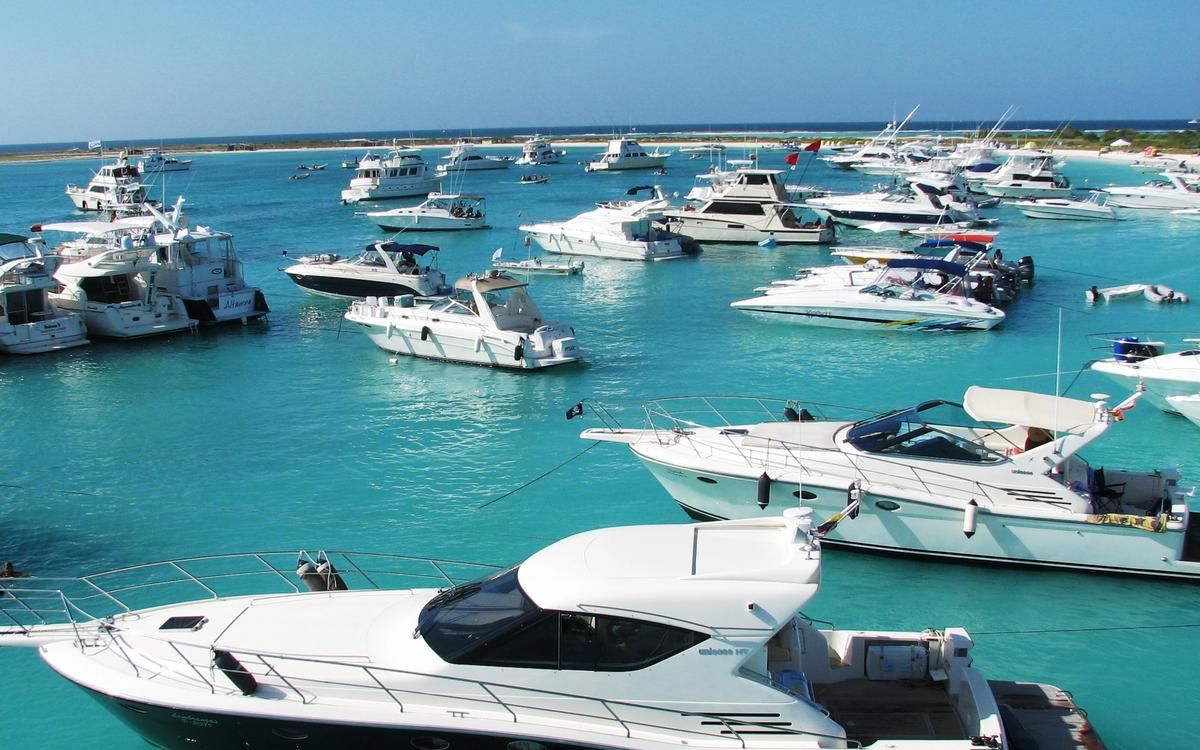
Proper anchoring requires understanding vessel dynamics and the seabed. Critical errors—negligent dragging, poor docking, defective lines—endanger other vessels. Seamanship excellence depends on vigilance and safety, never on complacency or pride.
- ANCHOR SWING CONSIDERATIONS
When multiple vessels share an anchorage, the ideal situation is for all of them to swing in unison, positioning themselves at a distance determined by the length of their rode. However, this homogeneous dynamic rarely occurs due to the diversity of vessels and the different types of anchoring used:
- Mooring buoy or sinker: The swing radius is minimal.
- Anchoring with rope/line: Generates a wide and variable swing depending on the scope veered.
- Anchoring with chain: Behavior varies with wind strength. The chain stretches completely in fresh winds or tidal changes; in light winds, its own weight restricts movement.
- Hull types: Flat-bottomed or inflatable boats experience pronounced leeway. Deep-draft, heavy vessels remain more stable. Likewise, boats with significant underwater area respond more to currents, while flat-bottomed ones react primarily to the wind.
2. ANCHORING TECHNIQUES AND MANEUVERS
Standard anchoring with headwind
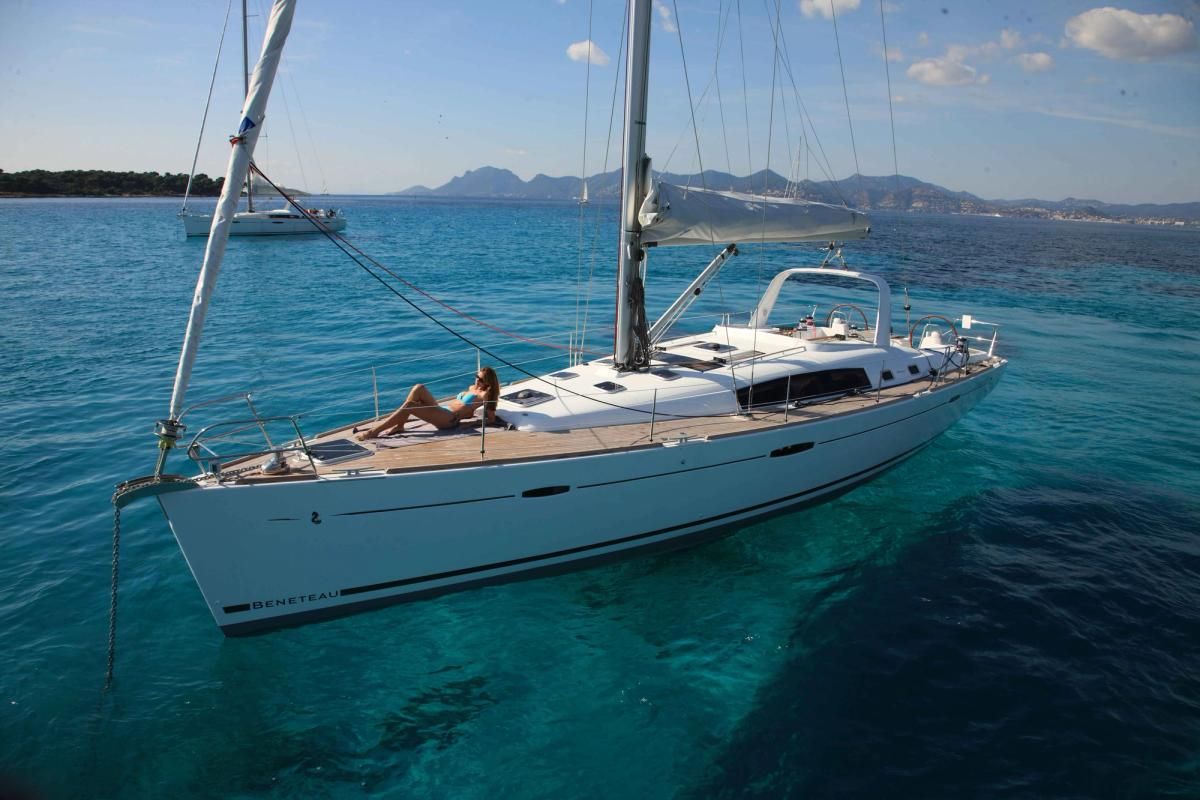
- Approach: Approach downwind of the chosen spot, turn head to wind, and shift to neutral. Apply reverse gear to stop way and initiate sternway.
- Dropping anchor: With the vessel stopped, pay out a length of line equal to the water depth to prevent the chain from piling up on top of the anchor and fouling it.
- Veering line: As the boat gathers sternway, continue paying out line while maintaining light tension at the bow to prevent the boat from lying broadside to the wind.
- Verification: Once the appropriate rode is paid out, take abeam bearings to verify that the anchor has set correctly.
Using a trip line (tripping the anchor): To recover an anchor that might become fouled, a trip line (rope) is secured to the anchor crown with a buoy at its end or directly led on board.
- Line properties: It should be polyamide or polyester, strong but not excessively thick so as not to offer resistance to the current.
- Trip line to a buoy or float: The length should slightly exceed high water depth. When getting underway, recover it from the tender to avoid entanglement with propellers.
- Trip line on board: It must be kept with a bight of about three meters relative to the rode to prevent jerking on the anchor.
Bahamian mooring: Consists of working with two anchors forming an angle between their lines:
- For heavy weather: The angle should be less than 100° so that both anchors share the load.
- To reduce swing: The angle will vary depending on conditions. If the lines are close together, they should have different lengths to prevent the anchors from tangling as the boat swings.
Bow and stern anchoring: This method becomes unstable if wind or current pushes the vessel broadside, exerting great pressure on both anchors. If caught broadside, it is best to release one of the lines attached to a marker buoy or adjust to a 180° orientation.
3. WEIGHING ANCHOR AND UNFOULING ANCHORS
Vessel status when weighing anchor
- Anchored: Firmly held by the rode.
- Short stay: Part of the rode has been heaved in, but the anchor remains firmly set on the bottom.
- Up and down: The bow is vertically above the anchor, and it is about to break out from the seabed to be weighed.
Disengaging fouled anchors If the anchor gets stuck and no trip line was previously set:
- Angular traction: Apply jerks from the boat forming angles of 45°, 90°, and up to 120° relative to the original anchoring line.
- Use of a sliding ring: Pass a rigid or weighted ring over the chain tied to a strong line, slide it down to the anchor crown, and pull upwind from the tender to dislodge it in the opposite direction.
4. COMMON ERRORS AND POOR SEAMANSHIP
- Negligent dragging: Ignoring seabed quality, failing to allow swing space, or not paying out sufficient chain leads to collisions and tangles with neighboring anchorages.
- Docking maneuver deficiencies: Approaching at excessive speed, failing to prepare lines or boat hook, and ignoring the effects of wind, current, and propeller walk (right/left-handed pitch).
- Poor and inefficient trim: Cruising with excessive bow-up angle due to improper adjustment of trim tabs or outdrives, dramatically increasing fuel consumption.
- Incorrect mooring: Refusing to use shore lines when rafting alongside another vessel, overloading the neighboring boat's mooring lines.
- Seamanship arrogance: The gravest fault at sea is arrogance. While a beginner's inexperience is understandable, disregarding good practices through overconfidence compromises the safety of the entire fleet.
#AnchoringSafety #SeamanshipExcellence